In a context shaped by our loss of capacity to build our own technology and the difficulty of defending digital rights, Barcelona hosted the first Open Tech Week, bringing together experts, companies and institutions to discuss open technology at the service of citizens.
The Canòdrom was the epicentre for the five-day event, hosting workshops and lectures on digital transparency, security and sovereignty. Coinciding with the meeting was the Decidim Fest, with activists, public institutions, organisations and communities from the technopolitical and digital sovereignty ecosystem, and the Mozilla Festival, which promotes alternative models to the dominant internet.
For its part, Barcelona City Council is working on a city pact for open and democratic technologies, the aim being to move towards a city committed to people, digital rights and public technologies.
The city reaffirms its role at the forefront of sports innovation with the second Barcelona Sports Hub meeting, a space connecting businesses, start-ups and institutions to drive projects that transform the sector through the city.
One of the most important announcements at the event was the launch of the new website, a digital platform offering greater visibility and more business opportunities to participating organisations.
The new functions include a job pool specialising in sportstech profiles, a space where members can publish news and projects and a matchmaking tool to facilitate strategic collaboration with investors, corporations and other organisations and institutions.
The other main new aspect of the event was the presentation of the Barcelona City Sports Lab, which will enable projects to be tested in municipal facilities and public spaces as part of the urban transformation.The .barcelona domain backs this move to make sport a social and economic driver for the city, plus the digital transformation project for the sector. For more information, go to sportshub.barcelona.
The ICANN launched its first project series of subsidies in 2024, under the name ICANN Grants. The goal is to support initiatives from around the world working towards a safer, more inclusive and accessible internet.
ICANN Grants backs projects that address some of today’s main challenges for the network, such as:
Improving the security of systems that make it possible for domains to work.
Fostering innovation based on open standards and transparent technology.
Fostering greater participation by new stakeholders in the governance of the internet.
The grants not only provide funds, but also recognition and the promotion of initiatives aimed at building a more equitable and sustainable internet.
The call
In May 2025, the ICANN announced the 23 projects selected. One of these presented by the .cat domain, through Accent Obert (formerly Fundació .cat): a proposal based on assessing the performance of territorial domains (geoTLD) as a tool for improving internet access the world over.
Under the name Assessing GeoTLD’s Performance for Enhanced Internet Accessibility: An Open-Source Methodological Approach, the project will create an open-source methodology whereby any TLD in the world can check which treatment it gets from traditional and AI-based search engines, the goal being to generate useful knowledge for other linguistic, cultural or urban communities.
The role of the .barcelona domain
The .barcelona domain, as with 11 other domains in the cultural, linguistic and geoterritorial sphere, backed the proposal presented and will play a key role as a case study within the project.
Its role as a geoTLD aimed at citizens, language and digital proximity makes it a valuable example within the project headed by Accent Obert. It also strengthens the commitment of the city and the territory to a more inclusive and decentralised network which respects diversity.
The Bicing service has become an international role-model in sustainable mobility. The service was chosen as an example of good practice in bike-sharing in the seminar “Shared and Active Mobility Solutions”, organised as part of the European TERRAIN project.
Various European cities have visited Barcelona to get a first-hand look at how the service works. Much of Bicing’s success can be attributed to the density of stations, its interconnection with other means of public transport and the use of advanced technology for smart bicycle redistribution.
With its own .barcelona domain, Bicing stands out as it is flexible, economic and healthy. Offering electric bikes and push bikes and boasting more than 500 stations, the service allows users to get around the city easily. With over 150,000 users at present, the success of the model now goes beyond frontiers.
One of the responsibilities of the ICANN is to ensure that domain registration companies meet the established standards and regulations, the goal being to guarantee the security and reliability of the system. If a registration company does not achieve the minimum requirements, they may lose their accreditation. Although this measure is not often adopted, it is needed for the domain name system to function properly.
Main reasons for losing accreditation:
1.Non-compliance with the accreditation agreement for registration companies (RAA): when domain data protecting the privacy of holders are not maintained correctly.
2.Fraudulent practices: activities such as the falsification of information or the sale of inexistent services.
3.Non-compliance with payments: registration companies must be up to date with the payment of taxes and annual ICANN payments.
4.Lack of collaboration in audits: registration companies are obliged to collaborate when the ICANN conducts audits and checks operations to guarantee compliance with regulations.
5.Lack of client support and service: registration companies must guarantee suitable customer service and offer technical support for domain holders.
6.Commitment to security: registration companies must work for the security of the domains they manage.
How does this affect domain holders?
When the ICANN withdraws accreditation from a registration company, the domains they manage are transferred to another operator. This process may mean changes in technical management or in access to the control panel. However, these situations are not very common and domain holders generally receive clear instructions to avoid any sort of disruption.
At the .barcelona domain, we work to ensure that any incident of this type is managed promptly and efficiently, keeping any disruptions for users to a minimum.
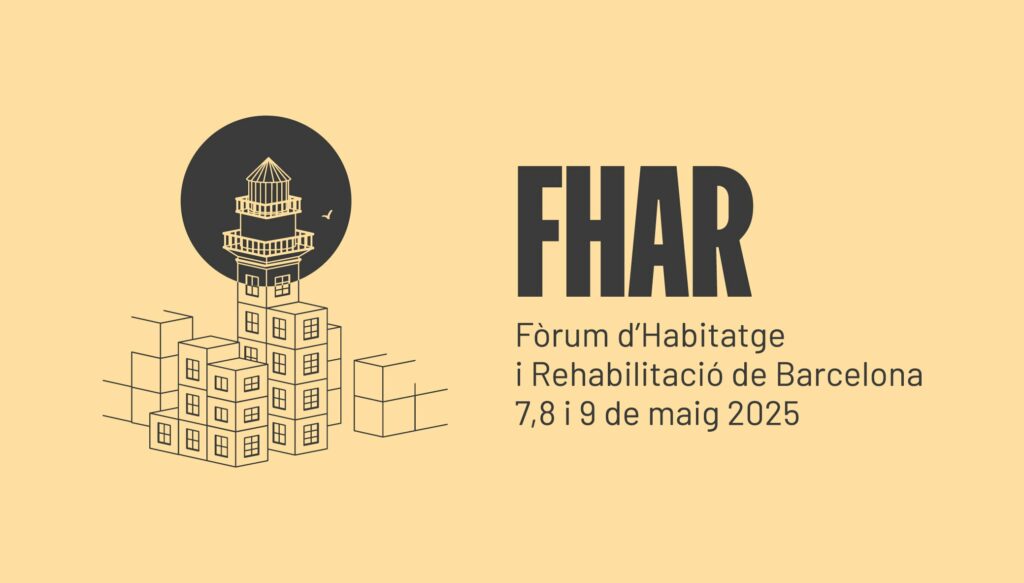
The FHAR initiative, which brings together professionals from the public and private sectors to work on the future of the right to housing, is back at the Palo Alto Barcelona site on 7,8 and 9 May, with experts and professionals from this sector taking part.
The fourth edition will be looking at some of the main topics of debate, such as the regulation of the market, taking into account the perspectives of the administration, private companies and organisations defending the right to housing.
The programme for the FHAR includes discussions about one of the options for turning the current situation around: increasing affordable public housing, with the participation of representatives from different administrative levels.
Decarbonisation is one of the goals that will be achieved through improved energy efficiency in housing. The main areas of innovation and transformation in this area will be presented at the forum, with a look at international models.Besides the discussion sessions, workshops and visits to different housing projects in the city are being organised, including new-build projects and energy renovation projects in public housing. More information at fhar2025.barcelona.
“Mercats a un clic” is up and running, offering an online sales platform for Barcelona’s municipal markets. Fifteen markets have joined in with the initiative, which allows customers to shop at markets from anywhere and at any time of the day.
The platform allows users to place orders with a mobile app or on the websitemercatsaunclic.barcelona. This enables markets to adapt to new needs and shopping habits, with customers able to receive their orders at home or pick them up from the market, even outside of opening hours thanks to refrigerated lockers located at market entrances.
The pilot project “Mercats a un clic” began in June and currently has 91 participating establishments, offering a wide range or produce such as fruit, fish, seafood, poultry, eggs, meat, pulses, cold meats, cheese and dietary products.You can place your order at mercatsaunclic.barcelona.
Barcelona City Council has decided to close all its accounts on this social media network, except for the profile @bcn_ajuntament, which will only be used to give information on emergencies, weather alerts and disruptions to mobility.
The decision corresponds to the City Council’s commitment to reliable communication, in the face of the disinformation generated by the X platform. The aim of the move is to guarantee that members of the public receive reliable information in line with the values of digital democracy.
Despite closing its X accounts, the City Council will continue to provide information through its other official channels, such as Instagram, Facebook, YouTube and LinkedIn, as well as the municipal website. This will allow the institution to continue its broad coverage of verified and accessible information for citizens.
The profile @puntBarcelona has also ceased to be present on X, but we remain active on Instagram and Facebook. You can also sign up for the digital newsletter to get updated official information directly by email.
February got under way with some changes to mobility in the city. The new by-law on circulation in the city, which you can find on the website mobilitat.barcelona, aims to preserve pavements as pedestrian spaces by prohibiting bikes and personal mobility vehicles (PMV) from circulating on them, except for children with bicycles and those accompanying them.
It’s worth noting that PMVs will now be classed as unipersonal vehicles, meaning they can only carry one person, and should have essential safety elements: helmets are obligatory, and the vehicle must have front and back lights. The current legislation prohibits the use of PMVs by those under 16 and establishes a speed limit of 25 km/h.
The new text prohibits bikes and PMVs from circulating on pavements, which will be exclusively for pedestrians. As an exception, adults carrying children with authorised systems (trailers or child-seats) or accompanying children up to 12 years of age on bicycles will be able to circulate on pavements, as will those under 14 and adults transporting children where there is no bike lane.
Either way, the obligation remains for cyclists and PMV riders to get off their vehicle in crowded spaces shared with pedestrians.
Besides the specific prohibition on parking motorcycles on pavements near schools and hospitals, the by-law on circulation, pedestrians and vehicles also means fines for parking in front of reserved pedestrian entrances, in bike lanes or in front of waste containers. The recommendation continues to be to park these vehicles on road surfaces.
The new by-law also introduces fines of up to 500 euros to guarantee compliance with the measures established. Besides the website mobilitat.barcelona, the new by-law can be found in Barcelona City Council’s Open Repository on Knowledge.
Access to housing is one of the main challenges for the city in the coming years. Barcelona has launched a new strategy to respond to the issue during this term of office, thePla Viure.
The plan, which users can follow on the website habitatge.barcelona, not only defines the goals but also the actions and services in this area for the period 2025-2032, notable aspects being:
Making the right to housing universal: enlarging the stock of affordable social housing.
Renovating and improving housing: with sustainability, accessibility and comfort.
Addressing vulnerability: the demographic challenge and life stages.
The future Barcelona Housing Plan 2025-2032 is now under way with aparticipatory process open to everybody. In this first stage, an assessment will be made of the measures implemented in recent years in the city, with discussions on new proposals for the next eight years. The participatory sessions will run until the summer of 2025.If you want to stay up to date, don’t forget to check the website habitatge.barcelona.